
Agriculture Intelligence Platform
What if you could see every field, every stress signal, before the season turns?
Eartheye Space provides food security agencies and agriculture ministries with real-time satellite intelligence across millions of hectares — replacing delayed field reports with national-scale visibility before the harvest window closes.
- FOOD SECURITY
- GOVERNMENT & MINISTRIES
- NATIONAL CROP MONITORING
- YIELD FORECASTING
- LAND ENCROACHMENT
- ACTIONABLE INTELLIGENCE
- POLICY & PROCUREMENT
6
Sensor types fused into one intelligence layer — MSI, HSI, SWIR, TIR, GHG, SAR
Weeks
Earlier — stress signals detected before visible crop damage appears
100k+
Hectares per concession monitored in real time — every boundary, every change
1
Unified national dashboard — replacing stacks of quarterly field reports
The Situation
The report arrives. The season has already moved on.
A senior agriculture specialist manages vast territory on behalf of a regional food security agency. A large map covers the wall behind the desk. Stacks of district field reports are piled on either side. Colleagues process data at screens in the background — data that was collected weeks ago.
The mandate is clear: monitor crop health across the region, forecast yields accurately, protect food supply, flag encroachments before they become losses.
The tools available have not kept pace with the scale of that mandate.
Delayed reporting. Hidden crop stress. Undetected land encroachments.
From the air, the fields look perfect. Stress and damage spread undetected across thousands of hectares. By the time a district report surfaces, the window to act has already closed.
“When the forecast is wrong, the cost falls on the entire nation.”
The Scale of the Mandate
Agricultural land across major food-producing regions spans tens of millions of hectares — distributed across fragmented, remote, and difficult-to-access geographies no field team can cover continuously.
The Cost of the Gap
Yield forecast errors cascade into miscalculated procurement prices, missed harvest logistics windows, and food supply buffers set on faulty data. The impact is systemic, not isolated.
The Irreversibility Problem
Land encroachments on licensed agricultural and forestry concessions, discovered after the fact, cannot be undone. The environmental loss is permanent. The regulatory exposure has already occurred.
The Challenge
Three gaps that undermine every food security decision
These challenges are not unique to any single country or institution. They define large-scale agricultural governance wherever the land outpaces the tools used to monitor it.
Delayed reports, unseen crop stress, and silent boundary breaches cause harvest losses before any agency or operator can act. The consequence is not merely operational — it is a national food security risk.
The Scale of the Problem
Agriculture is too large
to manage from the ground
The mandate of a food security ministry is national in scale. The traditional tools for fulfilling it are not.
12,000+ satellites are already in orbit. The raw data exists. The gap is in transforming it into national-scale, decision-ready intelligence — automatically, continuously, and at the speed that policy requires.
- Manual field surveys cover an estimated 5–10% of productive area per monitoring cycle — leaving the remainder to extrapolation and assumption
- Yield forecast errors cascade: procurement prices are set incorrectly, logistics plans miss peak harvest windows, food supply buffers are miscalculated at national scale
- Encroachments on licensed agricultural and forestry land, discovered late, expose agencies to accountability obligations and irreversible environmental loss
The Numbers Behind the Blindspot
5–10%
3+
12k+
100k+
Approach Comparison
Three approaches. Only one delivers national visibility.
See why conventional monitoring methods fail at the scale and speed that food security governance demands, and how EARTHEYE is the only approach that closes all three gaps simultaneously.
|
CAPABILITY
|
FALLS SHORT
MANUAL FIELD SURVEYS
|
FALLS SHORT
STANDARD SATELLITE TOOLS
|
SUCCEEDS
EARTHEYE
|
|---|---|---|---|
| Coverage per cycle | 5–10% of productive area | Partial — resolution-limited | 100% of monitored area |
| Intelligence speed | Weeks to compile and report | 3+ weeks for processed output | Real-time feeds |
| Crop stress detection | Visible damage only | Limited spectral range | Weeks before visible damage — 6 sensors |
| Sensor breadth | Ground observation only | Single-sensor | MSI · HSI · SWIR · TIR · GHG · SAR — fused |
| Boundary monitoring | Periodic patrol — incomplete | Not automated | Flagged the moment it is crossed |
| National scale | District-level at best | Regional, with gaps | National — 550+ satellites, no gaps |
| Output for policy | PDF field report | Raw imagery for processing | Decision-ready intelligence feeds |
The Solution
Not imagery. National intelligence.
EARTHEYE integrates six sensors into a single intelligence layer — transforming fragmented, delayed field data into real-time national visibility across crop health, water stress, yield risk, and concession compliance.
Step
01
Early Stress Detection — Weeks Before Damage Appears
HSI, SWIR, and TIR sensors detect water deficit, heat stress, and nutrient pressure at field level — weeks before stress becomes visible crop damage. Food security agencies receive early warning on yield risk at district level, with sufficient lead time to adjust procurement, logistics, and supply plans accordingly.
Standard satellite imagery misses these signals entirely. EARTHEYE is engineered to find them.
EARTHEYE reveals hidden stress early, turning unseen data into action before the season turns.
Step
02
Real-Time National Visibility — Every Field, Every Signal
From scattered district reports to a live national dashboard. Crop health status, yield risk signals, and production estimates are updated continuously across millions of hectares simultaneously. Procurement planners, food supply agencies, and ministers see the same satellite-verified picture at the same time.
Not next quarter. Not next week. Now.
From scattered data to real-time national visibility — every field, every signal: seen, tracked, and understood.
Step
03
Concession Boundary Monitoring — The Moment It Is Crossed
Every licensed concession — 100,000 hectares or more — monitored continuously. The moment a boundary is breached, EARTHEYE detects and flags it automatically. Agencies receive an alert before clearing advances, before the environmental loss becomes irreversible, and before the regulatory liability accumulates.
Boundary oversight at this scale is not possible through ground patrols. It requires space.
Every concession monitored in real time. Every boundary. Every change.
Sensor Intelligence
Yield risk — seen from every angle.
Standard satellite tools deliver one layer of data. EARTHEYE fuses six. Each sensor reveals what the others cannot — together, they form a complete picture of agricultural risk that no single-sensor platform can replicate.
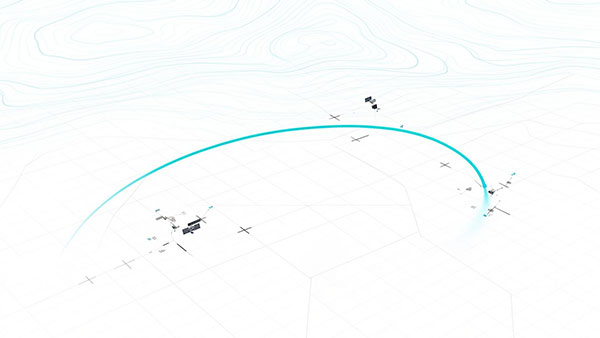
“EARTHEYE integrates six sensors into a single intelligence layer — turning fragmented signals into early, actionable decisions on crop health, water stress, heat, and yield risk.”
The Outcome
From reactive management to proactive foresight.
What changes when a food security agency or agriculture ministry can see every field, every stress signal, and every boundary breach — in real time, at national scale.

For National Food Security Agencies
Real-time crop health status at district and regional level — updated continuously. Yield risk signals weeks ahead of harvest. Procurement and supply planning grounded in satellite-verified data, not field survey extrapolation.

For Agriculture Ministries
A single national dashboard replacing stacks of district reports with one verified picture. Early warning on production shortfalls in time to adjust import, procurement, and logistics decisions before prices move.

For Land & Concession Oversight Bodies
Continuous boundary monitoring across licensed agricultural and forestry concessions — automated alerts the moment encroachments occur, with timestamped satellite evidence for regulatory follow-up and enforcement.
BEFORE EARTHEYE
- Quarterly manual field surveys
- Stress detected after visible crop damage
- Yield forecasts based on district samples
- Delayed, fragmented district reporting
- Boundary breaches discovered after the fact
- Coverage gaps across remote areas
- Reactive policy decisions — post-loss
AFTER EARTHEYE
- Continuous real-time national monitoring
- Early warning weeks before damage appears
- Six-sensor verified production intelligence
- Live national dashboard — one verified picture
- Encroachments flagged the moment they occur
- Full coverage — 550+ satellites, no gaps
- Proactive intervention before the season turns
BEFORE EARTHEYE
- Quarterly manual field surveys
- Stress detected after visible crop damage
- Yield forecasts based on district samples
- Delayed, fragmented district reporting
- Boundary breaches discovered after the fact
- Coverage gaps across remote areas
- Reactive policy decisions — post-loss
AFTER EARTHEYE
- Continuous real-time national monitoring
- Early warning weeks before damage appears
- Six-sensor verified production intelligence
- Live national dashboard — one verified picture
- Encroachments flagged the moment they occur
- Full coverage — 550+ satellites, no gaps
- Proactive intervention before the season turns
“Eartheye Space replaces blindness with real-time foresight — protecting food security before the loss occurs.”
About the Platform
EARTHEYE
EARTH OBSERVATION, MADE UBER EASY
Eartheye Space makes enterprise-grade satellite intelligence accessible to government agencies of any scale — through EARTHEYE, a self-service tasking and intelligence platform that unifies six sensor types across 550+ satellites into a single workflow.
There is no single-operator lock-in, no requirement for in-house remote sensing expertise, and no minimum project size beyond an annual credit commitment. From contract signature to first national intelligence feed in 48 hours.
- No GIS team required — automated extraction delivers intelligence feeds, not raw data requiring specialist processing
- No operator lock-in — all six sensor types in one workflow, across multiple satellite operators and constellations
- Pay-as-you-task — credit-based model aligned to government budget cycles and agricultural monitoring seasons
- Feeds from USD 100 — national-scale intelligence without infrastructure build or procurement overhead
- ArcGIS and QGIS compatible — integrates directly into existing government geospatial systems and workflows
- 48-hour deployment — from contract to first intelligence feed, with no parallel systems required
Multispectral Imaging
Crop health mapping · Sown area · NDVI indices
Hyperspectral Imaging
Stress signatures · Species identification · ~5m resolution
Shortwave Infrared
Vegetation water content · Drought stress mapping
Thermal Infrared
Heat stress · Irrigation assessment · Anomaly detection
Greenhouse Gases
Agricultural emissions · Methane and CO₂ monitoring
Synthetic Aperture Radar
All-weather · Soil moisture · Flood impact · Land change
Watch the Story
From space to field: real-time agriculture intelligence
Large-scale crop health monitoring, irrigation management, and early detection of pest outbreaks and nutrient stress — space-based intelligence is becoming a critical layer in modern agricultural governance.
Watch how Eartheye Space is changing this with EARTHEYE — the situational awareness platform built for food security institutions and agriculture ministries who can no longer afford to be blind at scale.
Stop forecasting from last month’s reports. Start seeing now.
Book a 20-minute demonstration and see real-time national crop health monitoring, early stress detection, and concession boundary intelligence across your region of interest.
- 6 sensors unified
- 550+ satellites
- Real-time feeds
- 48-hour deployment
- ArcGIS & QGIS compatible